Single vs Double Elimination: Which Bracket Should You Use?
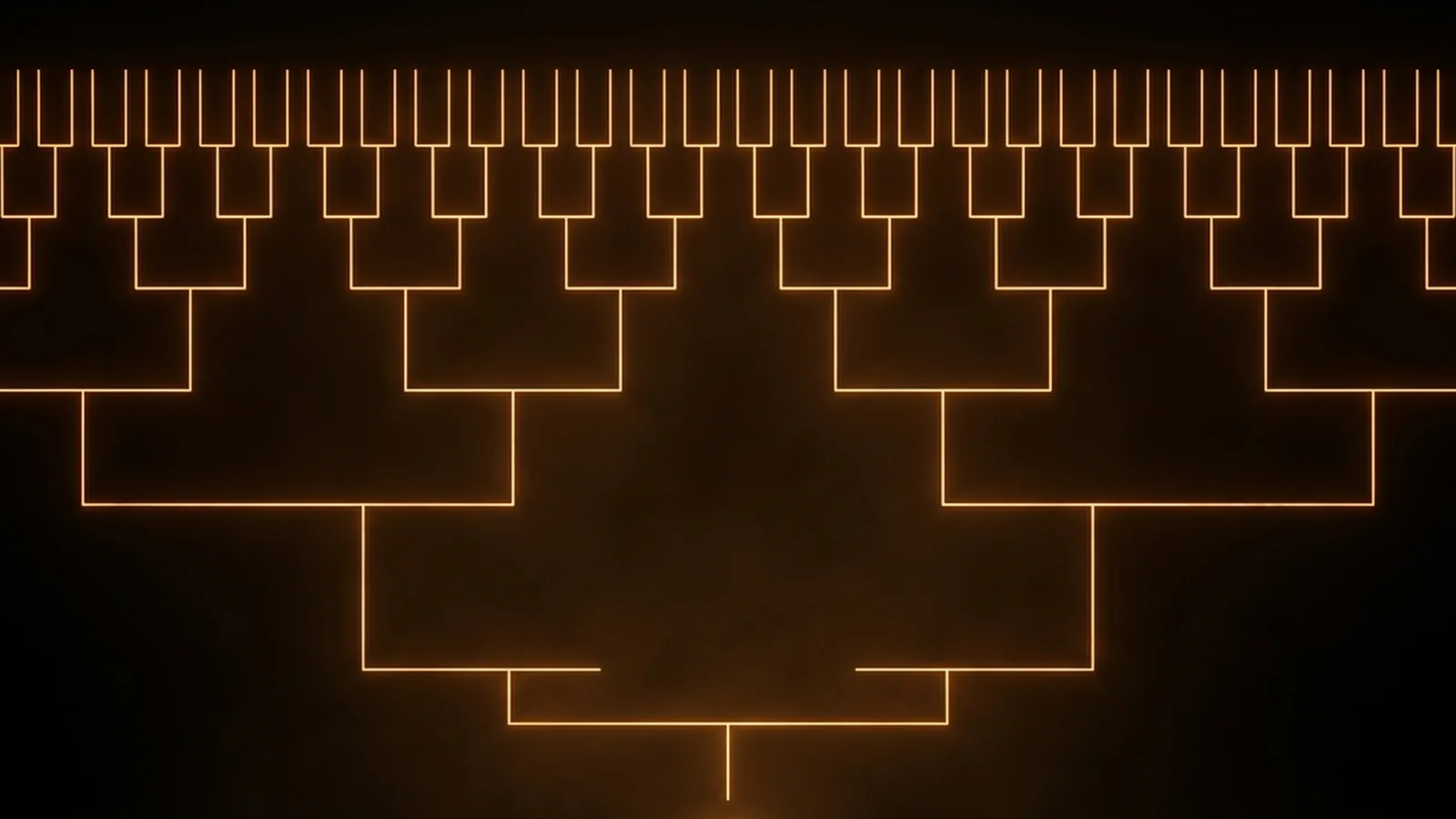
In single vs double elimination, the difference is how many losses end your run: single elimination removes a player after one loss, double elimination after two. Single is faster and simpler, while double is fairer to a player who had one bad match. Pick single when time is short and double when results matter.
In short
- Single elimination with N players needs N-1 matches; double elimination needs about twice that.
- Double elimination gives every player a second chance, but it takes much longer to finish.
- Choose single for large fields and short days, double for smaller fields and meaningful prizes.
- Byes and seeding matter more in single elimination, because one upset ruins the bracket.
- The double-elimination grand final may need a second match, so plan for it.
Which one should you pick in a hurry?
If you have to choose in a minute, count your players and your hours. Single elimination suits big fields and tight schedules, and double elimination suits small fields where a surprise early loss should not decide the result.
The tables and examples below show the cost of each choice in matches. If you are running the whole event, the wider checklist is in how to run a gaming tournament. If you are still deciding between a bracket and something else, round robin vs Swiss covers the formats that do not eliminate anyone.
A bracket is the diagram showing who plays whom and who advances. Both formats here are bracket formats.
Single vs double elimination at a glance
The two formats differ on match count, fairness, length and risk, and a table shows it quickest.
| Question | Single elimination | Double elimination |
|---|---|---|
| Losses to be out | 1 | 2 |
| Matches for N players | N-1 | about 2N-2, or 2N-1 with a reset |
| Matches for 8 players | 7 | 14 or 15 |
| Matches for 16 players | 15 | 30 or 31 |
| Rounds (8 players) | 3 | more, with two brackets running |
| Fairness to a bad start | Low | Higher |
| Best for | Big fields, short days | Smaller fields, bigger stakes |
Reading across: for 16 players, double elimination asks for double the stations or double the time. That is the real price of fairness.
How does single elimination work?
Single elimination is a knockout tree where the loser of each match leaves the event and the winner moves to the next round. The final winner is the only player who never lost. Wikipedia's page on the single-elimination tournament describes the same structure.
Here is an 8-player bracket with standard seeding, where seed 1 is the player ranked highest:
| Round | Matches |
|---|---|
| Quarter-finals | 1 v 8, 4 v 5, 2 v 7, 3 v 6 |
| Semi-finals | winner of (1 v 8) v winner of (4 v 5); winner of (2 v 7) v winner of (3 v 6) |
| Final | the two semi-final winners |
That is 4 + 2 + 1 = 7 matches. Standard seeding places the top two seeds in opposite halves so they can only meet in the final.
What if the number of players is not a power of two (2, 4, 8, 16, 32)? Then you give some players a bye, which means they advance to round two without playing. With 6 players in an 8-slot bracket, seeds 1 and 2 get byes, and you still play 5 matches (N-1).
How does double elimination work?
Double elimination uses two brackets: a winners bracket for players who have not lost, and a losers bracket for players who have lost once. A second loss ends your event. The double-elimination tournament page on Wikipedia gives the general structure.
With 8 players the flow is:
- Everyone starts in the winners bracket, which plays like the single-elimination bracket above (7 matches).
- Each winners-bracket loser drops into the losers bracket.
- The losers bracket takes 6 matches: 2 in its first round, 2 in the second, 1 in the third and 1 in the losers final.
- The winners-bracket champion meets the losers-bracket champion in the grand final.
That is 7 + 6 + 1 = 14 matches, or 15 if a reset is needed. The grand final reset exists because the winners-bracket champion has not lost yet, while the other finalist has lost once. If the losers-bracket champion wins the first grand final, both players now have one loss, so they play again. If the winners champion wins, the event ends.
What are the real trade-offs?
The real trade-offs are time, fairness, station use and how much waiting players do. Double elimination reduces the chance that one bad match decides the event, but it also keeps more players in the building for longer.
- Time. Roughly twice the matches. If matches last 20 minutes and you have 4 stations, 16 players in single elimination need about 75 minutes of play, while double elimination needs about 150.
- Fairness. Double elimination protects strong players from a single upset, which matters when the format is a game with high variance or a short best-of-one.
- Waiting. In single elimination, early losers go home early. In double elimination, they may wait long gaps between losers-bracket matches.
- Spectators. Single elimination builds drama fast because every match is final for someone.
- Admin load. Double brackets are harder to track on paper. Use software or a clearly drawn sheet.
Choose single if, choose double if
Use these decision rules rather than your gut.
Choose single elimination if:
- you have 16 or more players and limited time;
- matches are long, such as best-of-five series;
- the event is a casual cup where one loss is acceptable;
- you can seed players on real information.
Choose double elimination if:
- you have 8 to 16 players and enough time;
- there is a meaningful prize and you want the result to feel earned;
- the game has a noticeable luck or connection element;
- players travelled and would feel cheated by an exit after one match.
If neither fits, a group stage followed by a short knockout is a common middle route. The tiebreaker concept comes up there, and our rules template shows how to write it down.
What mistakes do organisers make with brackets?
The most common mistakes are using unseeded draws for strong fields, ignoring the grand-final reset, and underestimating time.
Common mistakes
- Forgetting the reset. Announce the grand-final rule before the event, or the finalist from the winners bracket will argue.
- Skipping seeds when you have data. If you know who is strong, seed them. A random draw can put the best two players in round one.
- Giving byes to random players. Byes should go to the top seeds.
- Counting only matches, not changeovers. Station switching, setup and result entry take minutes each match.
- Changing the bracket after publishing. Fix problems before release, then freeze it.
- Not stating the best-of. Say which rounds are best-of-one and which are best-of-three.
The seeding page on Wikipedia explains why placing top seeds in separate halves is standard practice.
How this works at Playsole
Playsole Gaming Lounge runs in-person tournaments, and both of the formats in this article are supported on the platform, alongside round robin, Swiss, and group stage plus playoffs. An organiser can choose single elimination or double elimination for an event, set best-of values, and allow solo or team entry.
Events can have an optional entry fee, a capacity with a waitlist, and a check-in before the event. After that, the bracket and results are published, so players can see who plays next and how an event finished.
Playsole Kharghar and Playsole Vile Parle host the events. The tournaments page lists what is currently open, and the event page is the place to read the format and rules for that specific tournament. If you are a player rather than an organiser, how to join a gaming tournament walks through registration and check-in.
FAQ
How many matches are in a double-elimination bracket?
A double-elimination bracket has roughly 2N-2 matches for N players, or 2N-1 if the grand final needs a reset. For 8 players that is 14 or 15 matches. Single elimination for the same field has 7. The extra matches come from the losers bracket.
Is double elimination fairer than single elimination?
Double elimination is fairer to a player who loses once by bad luck or a bad day, because that player stays alive. It is not perfectly fair, since the losers-bracket path means more matches in a row. It reduces the effect of one upset but does not remove it.
What is a bye in a tournament bracket?
A bye is a free pass into the next round when the number of players does not fill the bracket. With 6 players in an 8-slot bracket, two players receive byes. Organisers normally give byes to the top seeds, since the strongest players are the ones the bracket protects.
What is a grand final reset?
A grand final reset is a second final played when the losers-bracket champion beats the winners-bracket champion in the first one. Both players then have exactly one loss, so a second match decides the title. If the winners-bracket champion wins the first final, no reset is played.
Which bracket is better for a first tournament?
Single elimination is usually better for a first event because it is easy to explain, easy to run and finishes in the least time. Move to double elimination later when you know your match length and your players ask for a second chance. Keep the field small enough to finish on time.
Can you mix formats in one tournament?
Yes. Many events run a group stage with round robin, then send the top players into a single- or double-elimination playoff. That gives everyone several matches and still ends with a clear knockout finish. State the advancement rule and tiebreakers in writing before the first match.
Next step
Count your entrants, pick your match length and divide by your stations. If single vs double elimination is still undecided, use single when the total time is tight and double when you can afford it. Write the choice, the best-of settings and the grand-final rule into your rules before registration opens.
To see how formats are set up for real events, look at the tournaments page or book a station to practise a bracket with friends. If you also want to improve your own results between events, how to climb the leaderboard is a good follow-up, and best PS5 couch co-op games lists games that work well for friendly brackets.